Tel: +255 759 945 320
home > Top Travel Attractions > Tarangire National Park
Overview
Located in northern Tanzania, Tarangire National Park is one of the country’s most underrated wildlife treasures, often overshadowed by its more famous neighbors like Serengeti and Ngorongoro. However, those who venture into Tarangire are rewarded with an incredible diversity of wildlife, dramatic landscapes, and a unique atmosphere of wilderness that feels untouched and authentic. Known for its massive elephant herds, ancient baobab trees, and sweeping savannah plains, Tarangire offers an unforgettable safari experience filled with raw beauty and tranquility.
At Cheetah Chase Safaris, we consider Tarangire a must-see destination for anyone seeking a genuine and intimate connection with African wildlife. The park’s serene environment, rich biodiversity, and seasonal animal migrations make it an essential part of the northern Tanzania safari circuit.
History and Establishment
Tarangire National Park was established in 1970 and covers what was once an important seasonal migration corridor for wildlife moving between Lake Manyara and the Maasai Steppe. Before its designation as a national park, this region was a vital dry-season refuge where animals congregated around the Tarangire River, the only permanent water source in the area.
The park was named after this lifeline river “Tarangire”, derived from the local Maasai language, meaning “the river of warthogs.” The conservation efforts that followed its gazettement helped protect one of Tanzania’s most ecologically rich landscapes, now home to over 550 bird species and an impressive range of mammals.
Geography and Area Coverage
Tarangire National Park covers an expansive 2,850 square kilometers (1,100 square miles), making it the sixth-largest national park in Tanzania. The terrain is beautifully diverse, featuring rolling hills, acacia woodlands, swamps, floodplains, and the famous baobab-studded landscapes that give Tarangire its signature character.
The Tarangire River flows through the park from south to northwest before emptying into Lake Burungi. During the dry season (June to October), this river becomes the heart of the ecosystem, attracting thousands of animals from surrounding regions.
The park sits at an elevation ranging from 900 to 1,200 meters above sea level, with vegetation that varies from open grasslands to thick woodlands. Baobab trees, some estimated to be over a thousand years old, dominate the scenery serving as a vital source of food and shelter for many species.
Location and Accessibility
Tarangire National Park is conveniently located about 118 kilometers (approximately 2 hours by road) southwest of Arusha, the main gateway to Tanzania’s northern safari circuit. It lies between Lake Manyara National Park to the north and Ruaha National Park further south, making it easily accessible for both short and extended safari itineraries.
The park can be accessed through the Main Gate (Kwa Kuchinja) near the town of Makuyuni, where most tours enter. The drive from Arusha passes through scenic landscapes and rural Maasai villages, providing a glimpse of Tanzania’s cultural richness before even entering the park.
Alternatively, visitors can opt for charter flights from Arusha, Serengeti, or Zanzibar to Kuro Airstrip, located inside the park for convenience and shorter travel time.
Wildlife and Ecology
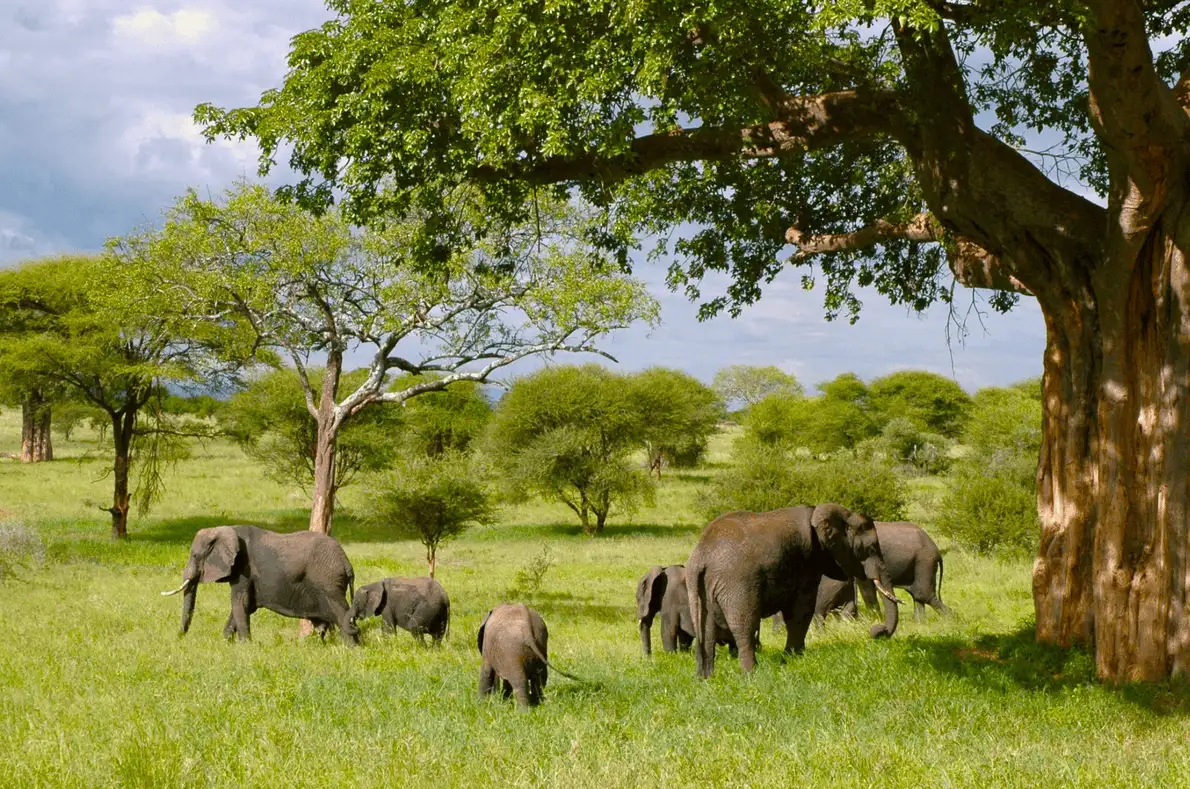
Tarangire National Park is often called “the land of giants” because of its enormous elephant population and towering baobab trees. During the dry season, Tarangire hosts one of the highest concentrations of wildlife outside the Serengeti, making it an excellent destination for year-round game viewing.
Major Wildlife Species
Birdlife
With over 550 recorded bird species, Tarangire is one of Tanzania’s top birding destinations. Notable species include the Kori bustard (the heaviest flying bird in Africa), yellow-collared lovebirds, lilac-breasted rollers, superb starlings, spotted eagle-owls, and a variety of hornbills and raptors.
Ecosystem and Vegetation
Tarangire’s ecosystem supports a wide range of habitats, from savannah grasslands to floodplains and seasonal swamps. The park’s iconic baobab trees play a key role in its ecology they store water in their trunks, provide nesting sites for birds, and offer nourishment for elephants that strip their bark for moisture.
The park’s vegetation changes dramatically between the wet and dry seasons, creating a dynamic landscape that supports both resident and migratory species.
Activities in Tarangire National Park
Game Drives
Game drives are the highlight of any Tarangire safari. The park’s open terrain and diverse landscapes make it ideal for spotting large herds of elephants, lions, and even rare animals like fringed-eared oryx and greater kudu. Both morning and evening game drives offer spectacular wildlife sightings, while full-day safaris allow deeper exploration into the park’s remote areas.
Walking Safaris
Guided walking safaris are available in certain zones and provide a thrilling way to experience Tarangire’s ecosystem up close. Led by armed rangers, visitors learn about animal tracks, plants, insects, and the smaller wonders of the bush that often go unnoticed from a vehicle.
Night Game Drives
Some lodges located within or near the park boundaries offer night safaris, where visitors can encounter nocturnal animals such as genets, bush babies, civets, and occasionally leopards on the hunt.
Birdwatching
Bird lovers can enjoy dedicated birding safaris, especially during the green season (November to May), when migratory species from Europe and Asia flock to the park.
Cultural Tours
Just outside the park, cultural tours to Maasai villages or local communities in Mto wa Mbu and Makuyuni give travelers a chance to experience traditional lifestyles, dances, and crafts while learning about the deep connection between the Maasai people and their natural environment.
Best Time to Visit
Tarangire National Park can be visited all year round, but each season offers unique experiences:
The dry season is especially spectacular, often described as a “mini migration,” as thousands of animals move into Tarangire when other water sources in the region dry up.
Accommodation Options
Tarangire offers a range of accommodation options catering to all budgets and preferences:
Many of these lodges feature open verandas or decks overlooking the plains, where visitors can often watch elephants and other wildlife right from their rooms.
Culture and Community Connections
The areas surrounding Tarangire are home to the Maasai and Barabaig people, both of whom have lived harmoniously with wildlife for centuries. Visitors can engage in cultural experiences that include traditional dances, storytelling, and visits to local bomas (homesteads).
Cheetah Chase Safaris emphasizes sustainable tourism, ensuring that your visit supports local communities and conservation initiatives that protect Tarangire’s delicate ecosystem for future generations.
Why Visit Tarangire National Park
Tarangire National Park is a sanctuary where the rhythm of nature plays undisturbed a place where elephants roam freely beneath ancient baobabs, and the golden plains shimmer under the African sun. Its intimate feel, fewer crowds, and exceptional wildlife viewing make it a true gem for both first-time visitors and seasoned safari travelers.
For anyone seeking a less-crowded, authentic safari experience in Tanzania, Tarangire National Park is the perfect destination. Whether it’s your first or fifth safari, the park’s raw beauty and wildlife spectacle will leave you with memories that last a lifetime.
At Cheetah Chase Safaris, we craft personalized itineraries that combine Tarangire with other world-famous destinations like Serengeti and Ngorongoro. Our professional guides ensure that every moment of your Tarangire adventure captures the spirit of Africa wild, majestic, and unforgettable.


Tel: +255 759 945 320
Email: sales@cheetahchasesafaris.com